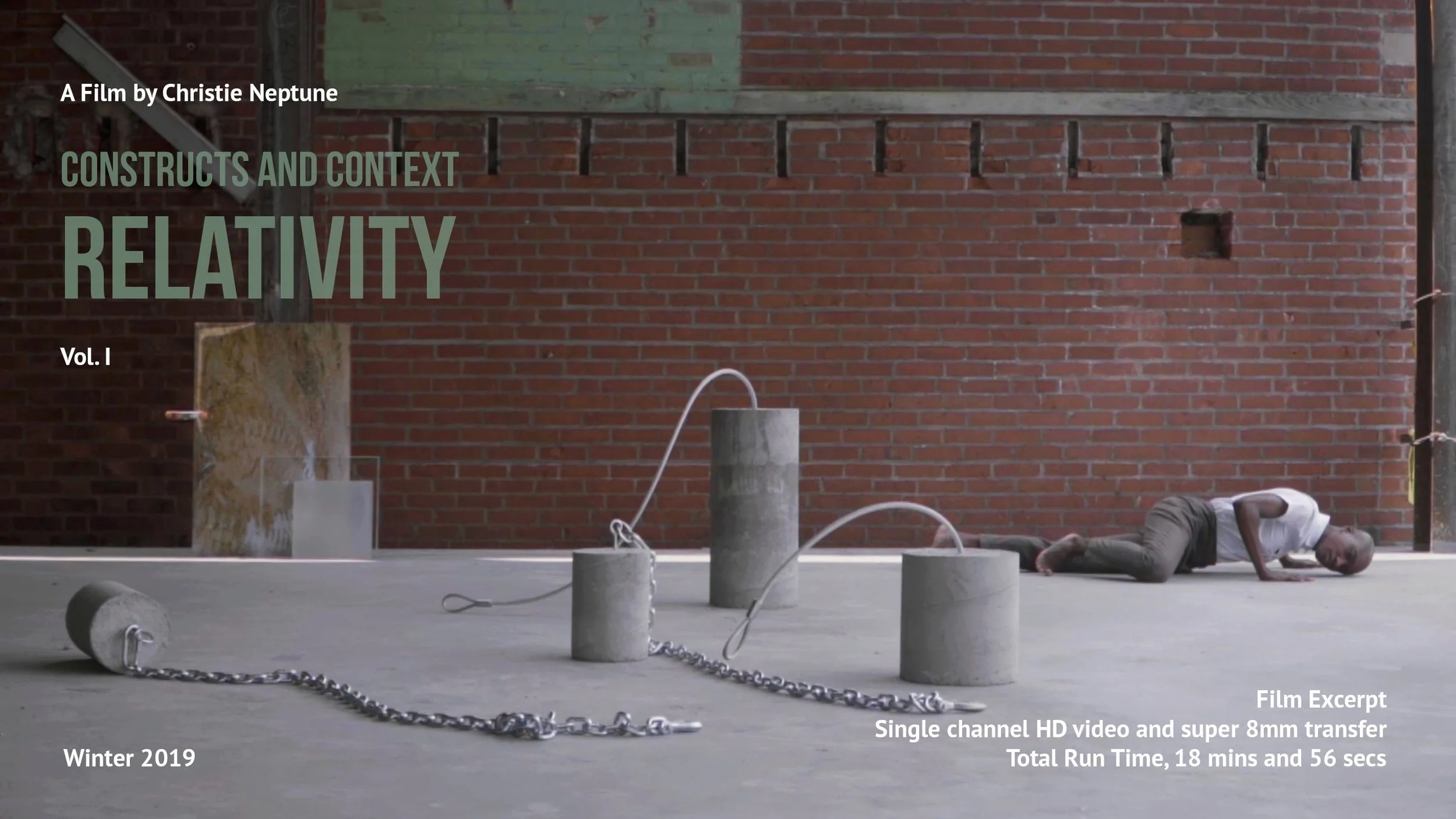
Christie Neptune, Constructs and Context Relativity: Performance I, Single Channel HD Video and Super 8mm Transfer, 18:56 min TRT
Constructs and Context Relativity, Performance I (2019)
What stories are revealed within the mediated states of “absence" and “presence,” and how might the body be used as a vessel to articulate them? In 2019, I started an ongoing project entitled, Constructs and Context Relativity (CCR). CCR is a three-part multimedia performance series that investigates how the roles of "absence" and "presence" inform the social productions of space. In a study that draws focus to my respective surroundings, urban architectural landscape, and community, CCR I, attempts to interrogate the immaterial and material relations of objects and the body within the built environment. The performance draws from research conducted during a one-year fellowship at NXTHVN.
In Performance I, I examine the site of a closed community center in the predominantly African American neighborhood of Dixwell (New Haven, CT) to foreground the temporal dynamics of "place." Concrete columns made from cylindrical molds, disparate industrial materials, and documentation of the urban in moving image and photography recall the physical remnants of a community cultural marker, developed during an American era of urban revitalization. Through recorded performance, processes of assemblage, and narration, I explore space, place, and the referent landscape as an abstract of material objects activated through the presence of the body, social history, and cultural politics.
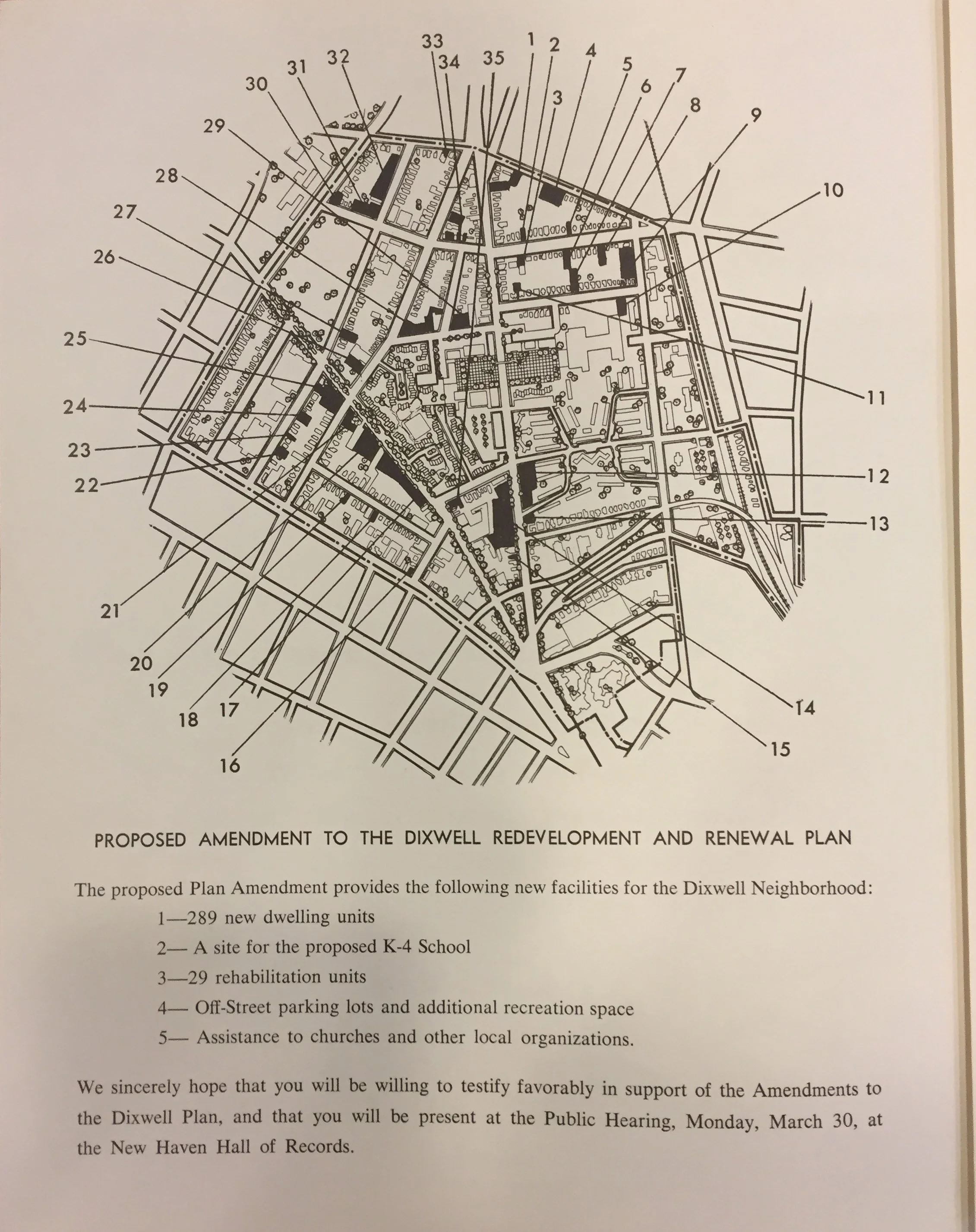
Proposed amendment to the Dixwell redevelopment and renewal plan, ca. 1960s. The proposed plan included affordable housing units, a business center, a school, and rehabilitation units. Image sourced from the New Haven Museum archives.
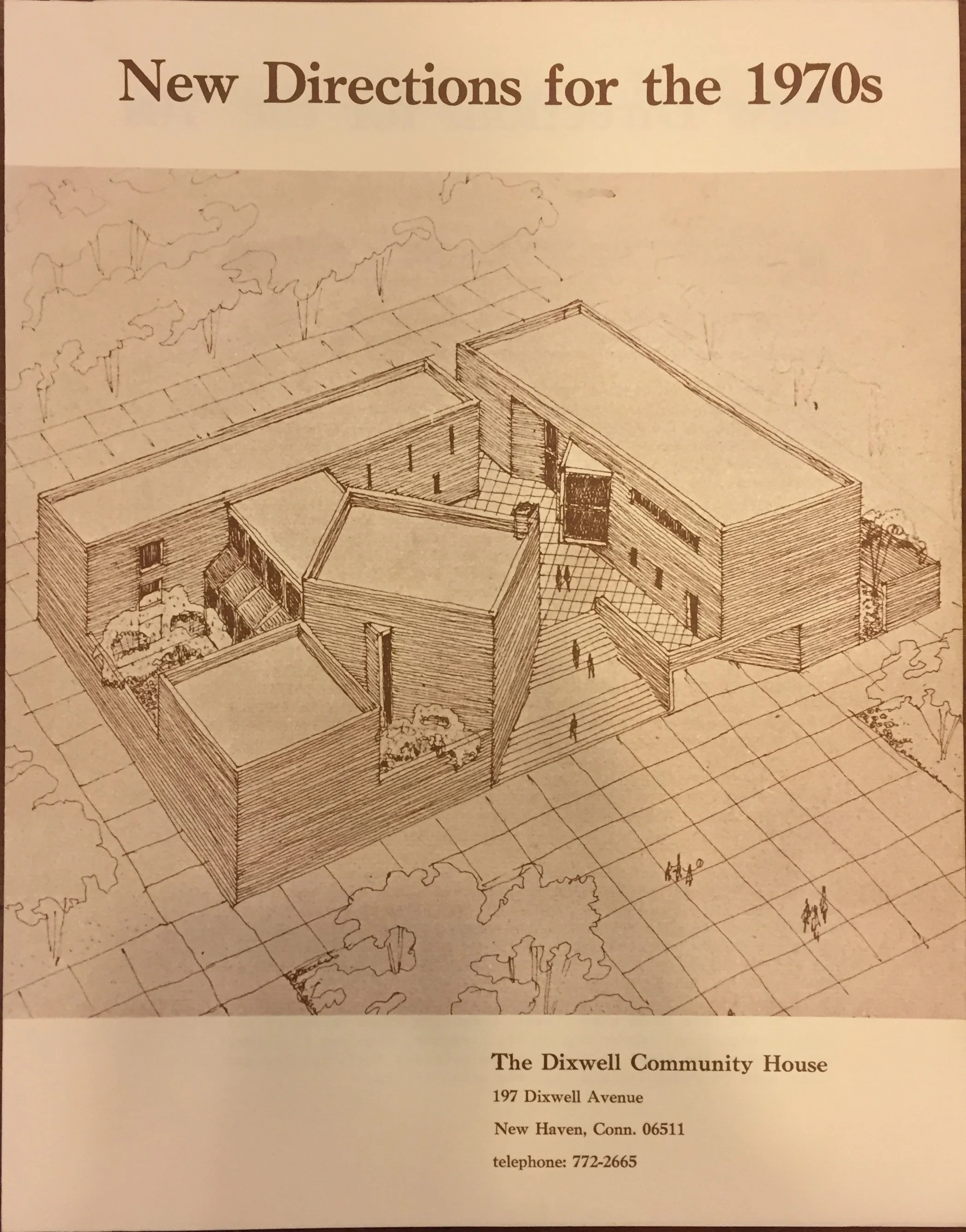
Mission statement and proposal for the old Dixell Community Center at 197 Dixwell Avenue (a replacement at the time for the old community center on 98 Dixwell Avenue). The facility opened in 1971 and closed in 2003. It remained an empty shell for 14 years until its complete demolition in 2017. Construction of the new structure that stands in its place began in late 2019. It opened officially to the public in the Fall of 2021. Image sourced from the New Haven Museum archives.
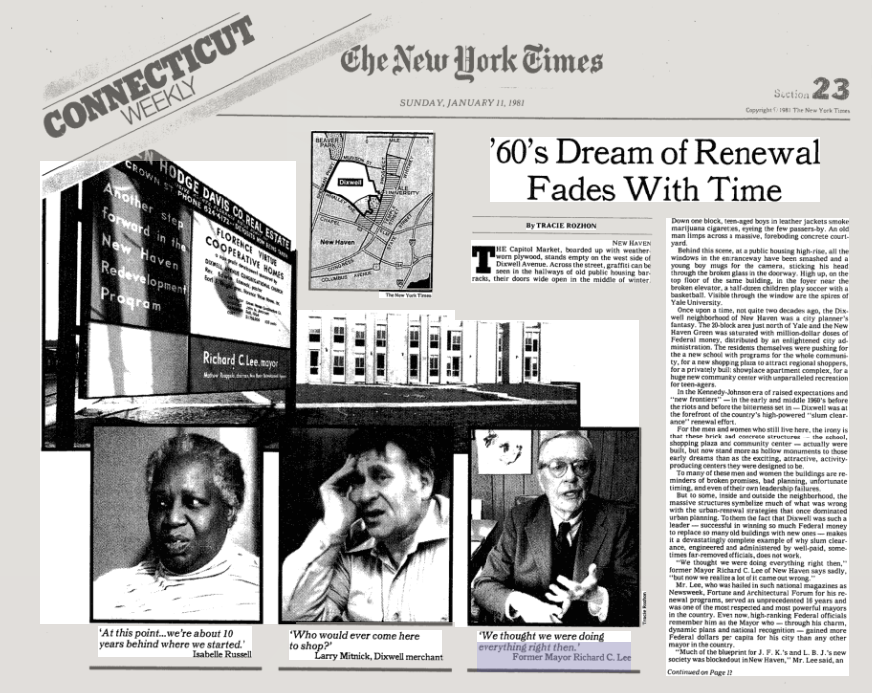
NY Times piece from Sunday, January 11, 1981, entitled “60'S DREAM OF RENEWAL FADES WITH TIME.” The article reflects on the state of urban decay in New Haven during the early 1980s and the promises of urban revitalization in the 1960s. https://www.nytimes.com/1981/01/11/nyregion/60-s-dream-of-renewal-fades-with-time-new-haven.html
While in fellowship, I photographed and recorded a series of properties along Dixwell Avenue. There were a number of new developments in construction and old developments that reflect, more deeply, a promise lost. I found myself constantly drawn to 197 Dixwell Ave, a site in flux. I began to think through its history(s), role in the community as a cultural landmark, and potential futures as the focal point of a community in transition.
From the vantage point of “absence,” the neighborhood of Dixwell is but a faded hub of past promise: urban decay in social and economic flux. However, from the standpoint of “presence,” new developments in the neighborhood signaled change, and change is a rather precarious thing. It can occupy many forms, and it is made visible only through the fullness of time. There were so many things collapsing and developing at the same time—the space, as it existed in 2019, was nebulous, and my role within it increased ambiguity. I was an outsider to Dixwell, brought into the community to make art in one of its new developments. My role as an “artist” associated with a private institution was palpable. Its implications needed to be demystified. For whom were these new developments intended, and how might they structure the prosaic of Dixwell’s existing community members? More importantly, how will the intended design of New Haven’s proposed future resolve the shortcomings of a federal promise? I found the spaces that I captured, old shells of past greatness and new vessels for futures unknown, told a story, one that collided the speculative musings of my own imagination with historical truths.
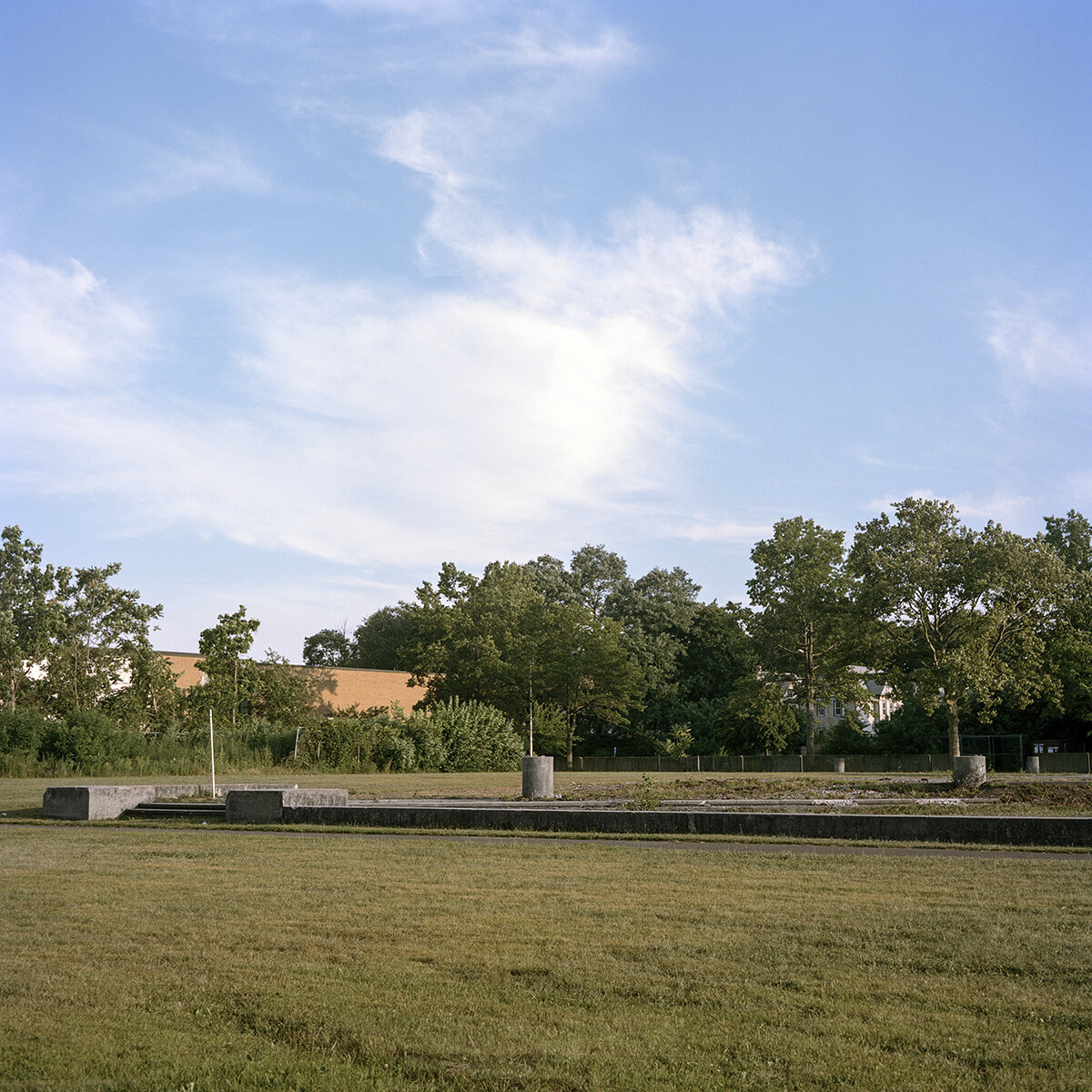
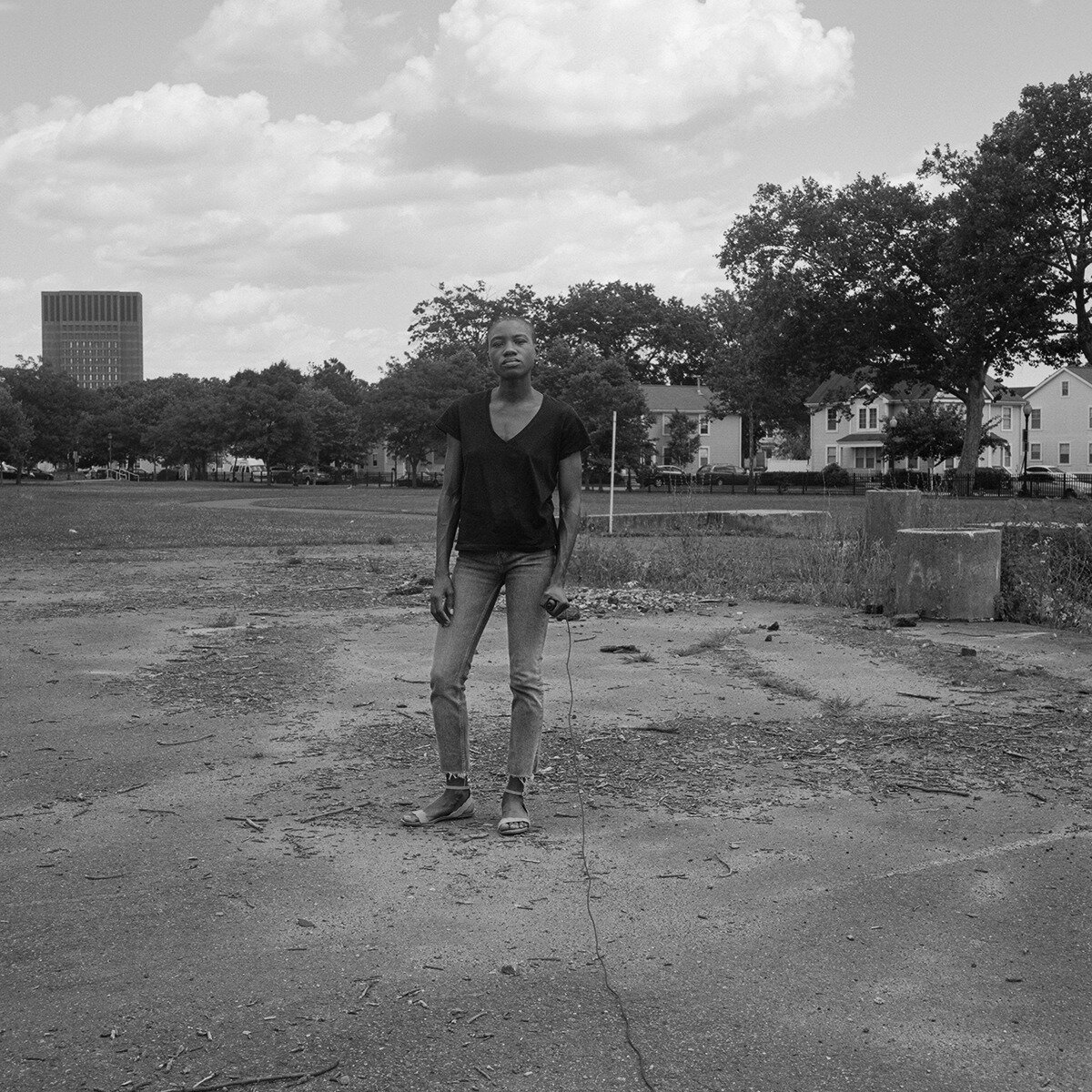
Christie Neptune, Remnants of an Institution at 197 Dixwell Ave (2019), Digital chromogenic print. 30 inches x 30 inches. 4 Editions + 2 AP Prints
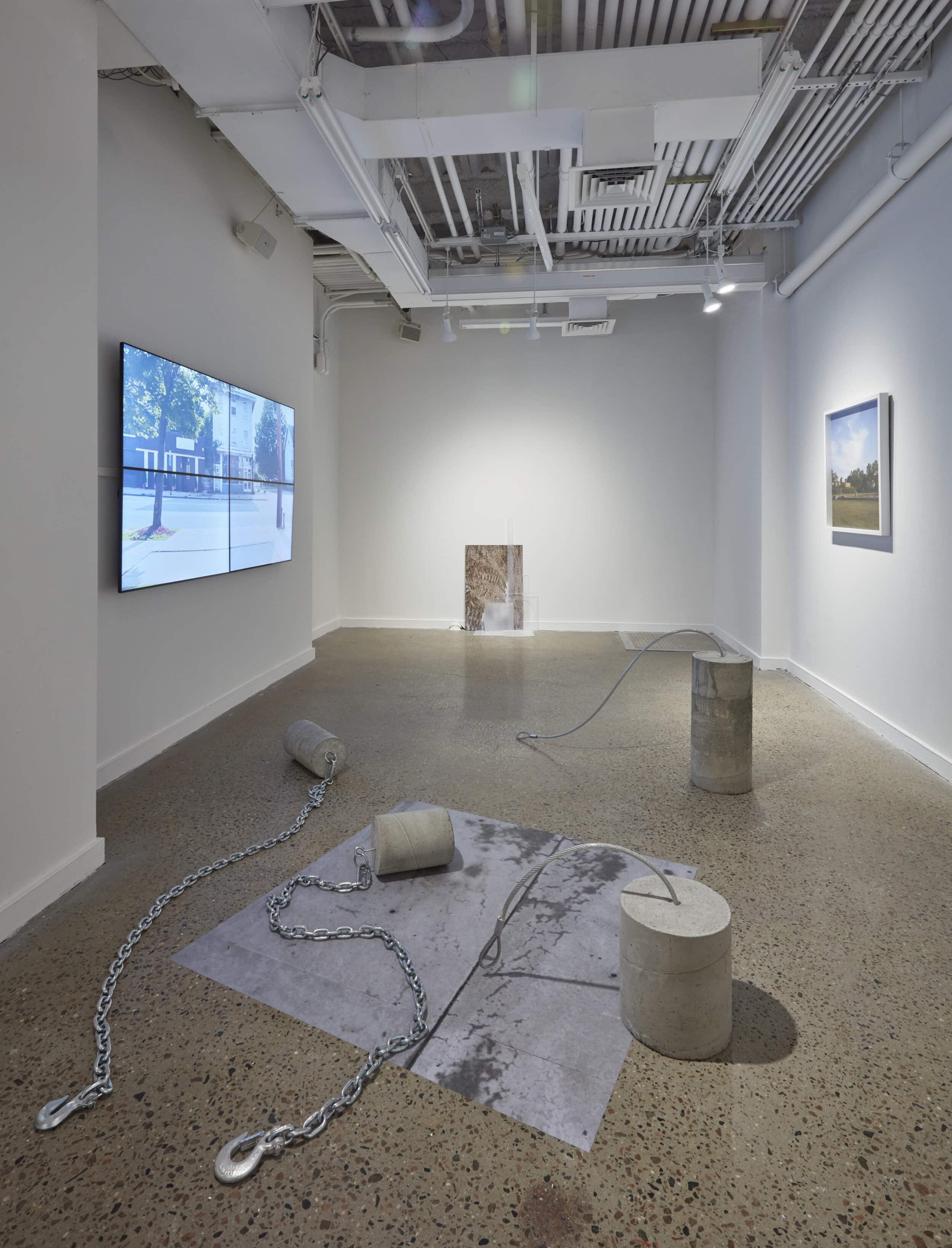
Installation View of Constructs and Context Relativity: Performance I, 2020, multimedia installation of varying dimensions. Image courtesy of BRIC.
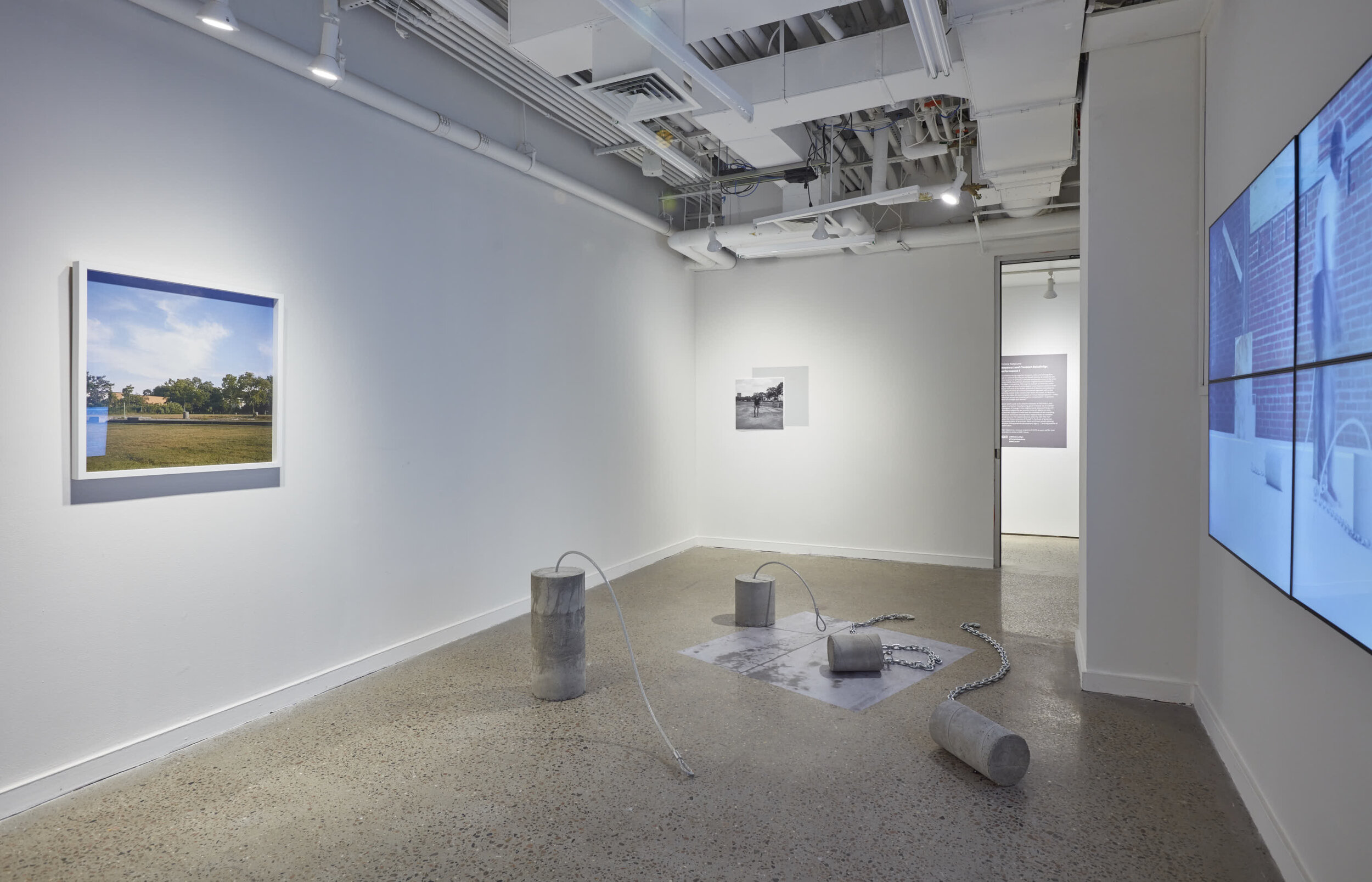
Installation View of Constructs and Context Relativity: Performance I, 2020, multimedia installation of varying dimensions. Image courtesy of BRIC.
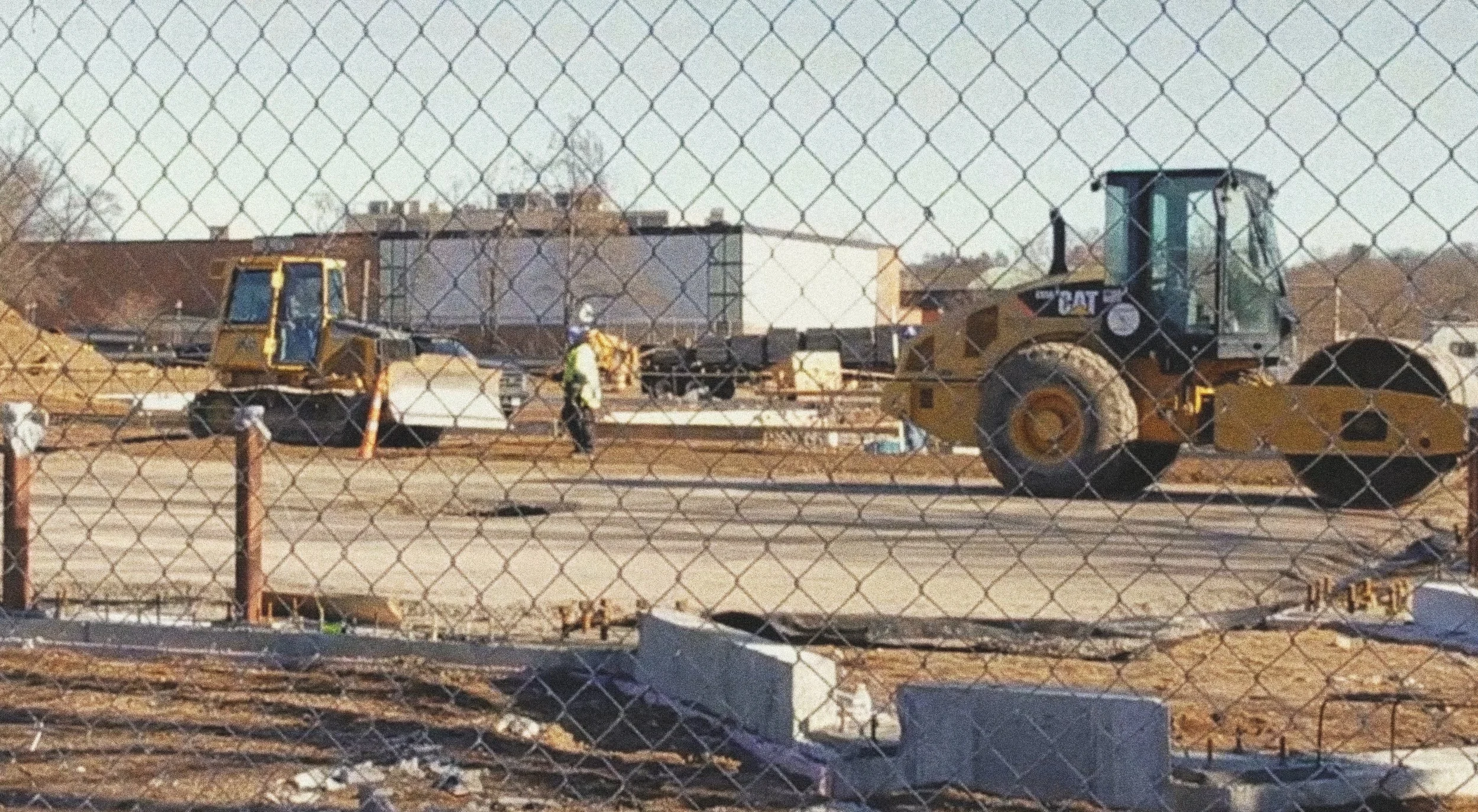
Untitled, Video Still (Super 8mm), Constructs and Context Relativity: Performance I, 2019. The image depicts work in progress towards the construction of the new Dixwell community house.
I like to think of Performance I as a moving portrait of a neighborhood in flux. The aesthetics and forms, crucial to this project, wrestle with this idea. Here, context and relativity are everything. There is nothing ingenious or special about the structural forms, photographs, or video. It is the context and the relationship they share with 197 Dixwell Ave that gives the project social weight. One sees how the photographs, sculpture, and recorded performance are placed in relation to one another and how this arrangement is critical to our understanding of place. If one were to alter the dynamics of that arrangement, context shifts entirely. The work, like the community it frames, exists in perpetual flux. CCR I, in essence, is rather a provocative, slow-moving portrait of Dixwell. It utilizes objects, recorded performance, narration, and photography within an alluring attempt to establish place and foreground the precarious nature of its current social landscape.